
The question sounds dramatic — but it’s being quietly asked more and more by owners, buyers, and even agents watching the activity inside The Cliffs at Possum Kingdom. You may have seen my previous article on The Ugly Truth About The Cliffs at Possum Kingdom (And What You Need To Know). Today we’re looking into the question so many people that are watching the market are wondering: is The Cliffs killing their own property values?
Dozens of developer-controlled resale lots are hitting the MLS.
Prices are significantly higher than similar privately owned lots.
Some buyers are purchasing at those higher prices.
So what’s actually happening?
Are values being artificially inflated… or is the developer dragging the entire market upward?
The truth sits somewhere in between — and understanding it matters whether you’re buying or selling.
The Situation Right Now
Here’s what makes this unique:
- Roughly 49 out of 121 active listings are being listed by the developer
- These are resale lots, not new phases
- Pricing often starts around $38,000+
- Similar privately owned lots are sometimes available around $6,000
- Activity spans all phases, not just select sections
That creates a strange dynamic:
- A buyer searching the MLS may primarily see higher-priced developer listings
- Lower-priced resale lots exist — but can easily get buried
- Some buyers purchase without realizing cheaper alternatives are available
This leads to the central concern:
Are buyers overpaying… and does that hurt existing owners?
Argument #1: This Could Hurt Property Values
There are three ways this strategy can negatively impact resale owners.
1. Inventory Flooding
When nearly half the inventory comes from one source:
- Listings compete against each other
- Individual resale lots get lost
- Especially those without strong marketing
In a community like The Cliffs — where many lots are similar — presentation matters more than ever.
A basic listing with no drone photos can disappear quickly among dozens of similar options.
This doesn’t necessarily lower values — but it reduces visibility, which slows sales.
2. Buyers May Be Overpaying
Some buyers purchase directly from developer-controlled listings without seeing:
- Lower-priced private resales
- Different phases
- Alternative lot sizes
- Comparable communities
When that happens:
- They buy at $38K+
- Then discover similar lots sold for $6K–$15K
- Their immediate resale value drops
This creates what many owners call a “value floor” effect — where the buyer’s perceived value doesn’t match resale reality.
3. Appraisal and Comp Challenges
Even if developer lots sell at higher prices, resale sellers may struggle to use them as comps because:
- Buyers perceive developer listings differently
- Marketing presentation differs
- Bundled incentives may exist
- Financing assumptions vary
So higher-priced sales don’t always translate into resale leverage.
Argument #2: This Could Actually Raise Values

Now let’s flip the perspective.
There’s a strong case that this strategy could increase long-term values.
1. Higher Sales Create Higher Recorded Comps
Regardless of perception, MLS-recorded sales matter.
If enough lots sell at:
- $35K
- $40K
- $50K
Then over time:
- Median prices rise
- Buyer expectations shift
- Appraisers start recognizing the trend
Markets don’t change overnight — they move gradually.
2. Developer Confidence Signals Market Strength
When a developer prices aggressively, they’re signaling:
- Belief in long-term demand
- Confidence in amenities
- Expectation of future growth
Buyers often interpret this as:
“If they’re pricing this high, the community must be improving.”
That perception alone can push values upward.
3. Amenity vs. Land Size Tradeoff
Here’s where the conversation gets interesting.
At higher pricing levels, 0.1–0.3 acre lots in The Cliffs begin competing with 2–4 acre lots in nearby communities
For example, buyers comparing to areas like The Hills Above Possum Kingdom face a choice:
Option A
- Smaller lot
- Golf course
- Clubhouse
- Pools
- Security
- Resort environment
Option B
- Larger acreage
- More privacy
- Fewer amenities
- Lower HOA structure
This becomes less about price — and more about lifestyle preference.
If enough buyers choose amenities, smaller lots can justify higher prices.

The Real Market Pressure
The biggest impact may not be pricing — it’s competition.
With heavy inventory:
- Listings must stand out
- Professional photography matters
- Drone imagery becomes critical
- Marketing strategy determines visibility
Lots without strong presentation risk:
- Getting buried
- Sitting longer
- Selling below potential
This is where individual sellers can still win — even in a crowded environment.
So… Are Property Values Being Hurt?
There are two possible outcomes.
Scenario A: Values Rise
If developer listings continue selling:
- Buyer expectations increase
- Recorded comps climb
- Resale sellers gain leverage
- Prices gradually converge upward
This is the optimistic scenario.
Scenario B: Market Splits
If buyers continue discovering cheaper alternatives:
- Two-tier market forms
- Developer lots sell high
- Resale lots sell low
- Gap persists
This is the risk scenario.
The Most Likely Outcome
Reality usually falls in the middle:
- Inventory flooding makes visibility harder
- Marketing becomes critical
- Some buyers overpay
- But long-term comps gradually rise
- Price gap slowly narrows
In other words:
Short-term confusion — long-term potential growth.
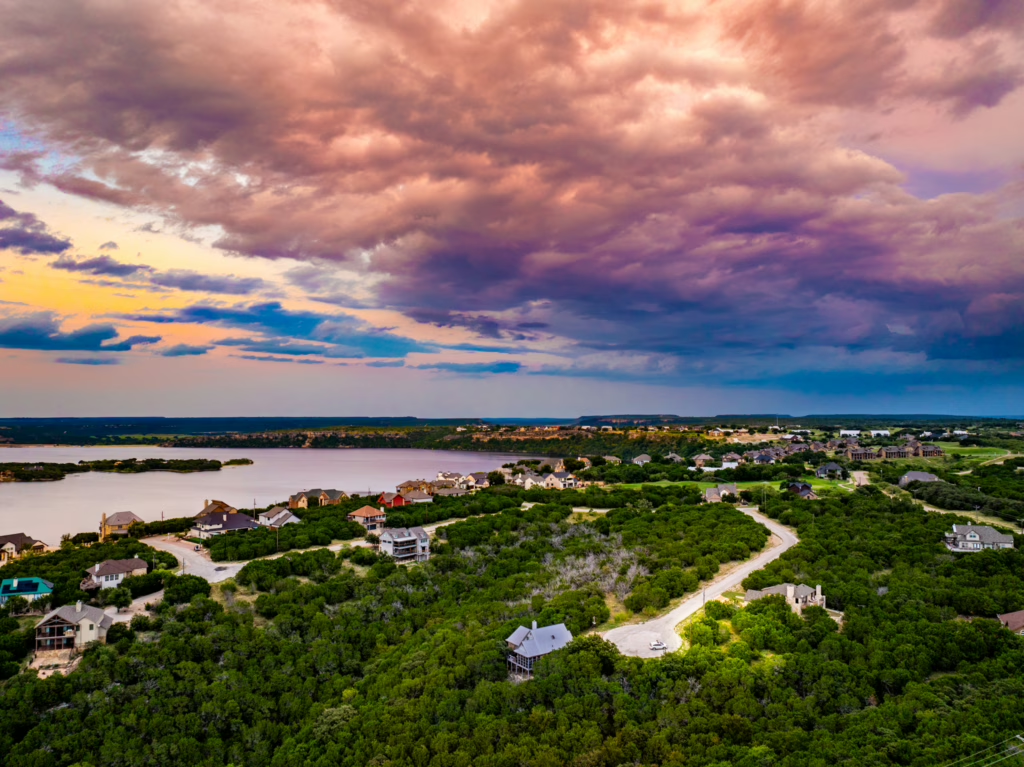
What This Means for Sellers
- Your lot is competing with dozens of similar options
- Presentation matters more than price alone
- Professional marketing is no longer optional
- Higher developer sales may help you later — not immediately
What This Means for Buyers
- Compare multiple listings before purchasing
- Understand resale pricing history
- Decide: amenities vs acreage
- Don’t assume higher price equals higher value
The Bottom Line
Is The Cliffs killing property values?
Not necessarily.
But the large volume of developer listings is:
- Flooding the market
- Making visibility harder
- Creating pricing confusion
- Forcing buyers to choose between amenities and space
At the same time, those higher-priced sales could eventually raise resale values — if the trend continues.
The outcome depends on one thing:
Whether buyers keep paying those higher prices.
If they do, values rise.
If they don’t, the gap remains.
Right now, both are happening at the same time — which is why the debate continues.

The question sounds dramatic — but it’s being quietly asked more and more by owners, buyers, and even agents watching the activity inside The Cliffs at Possum Kingdom. You may have seen my previous article on The Ugly Truth About The Cliffs at Possum Kingdom (And What You Need To Know). Today we’re looking into […]

Quick Summary: Architectural Trends at Possum Kingdom Lake Luxury lakefront homes at Possum Kingdom Lake are evolving rapidly — here are the top design and architectural trends investors and high-end buyers are focusing on: Luxury lakefront living at Possum Kingdom Lake is evolving. As someone who works closely with buyers and sellers in this market, […]

The Smart Investment in Texas Ranch Land Picture this: a crisp Texas sunrise spilling over rolling hills, white-tailed deer moving through mesquite-dotted pastures, and the quiet hum of possibility stretching across acres of untamed land. This isn’t just a scene; it’s an investment opportunity waiting to be seized. Texas ranches have long been a symbol […]
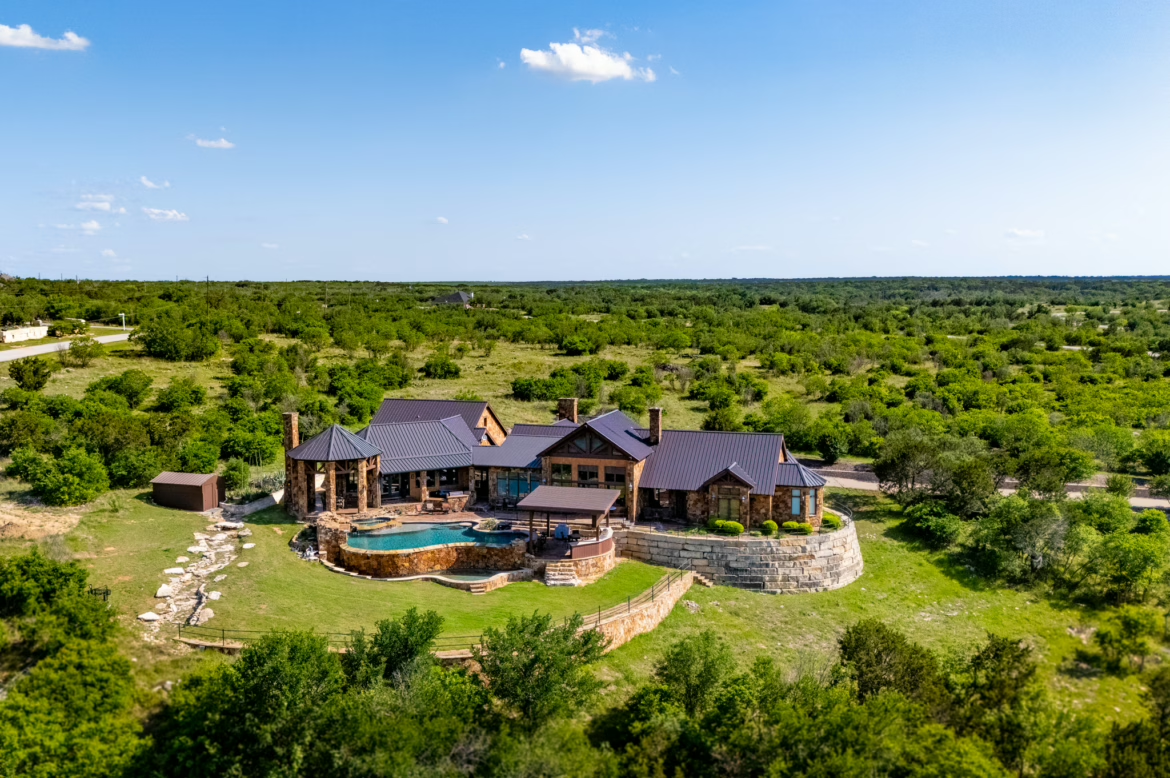
Welcome to Possum Kingdom Lake – Where Luxury Meets Natural Beauty Nestled in the heart of North Texas, Possum Kingdom Lake, or PK as locals call it, is more than just a body of water—it’s a lifestyle. Crystal-clear waters, rugged limestone cliffs, and breathtaking sunsets make it one of the most picturesque lakes in the […]

Written by Matthew Renfro, REALTOR®. Photos taken by Matthew Renfro, FAA Licensed drone pilot.